Field Note #4: Practicing possibility is harder than sensing it
How do you hold your ground when the work keeps asking you to become someone new?
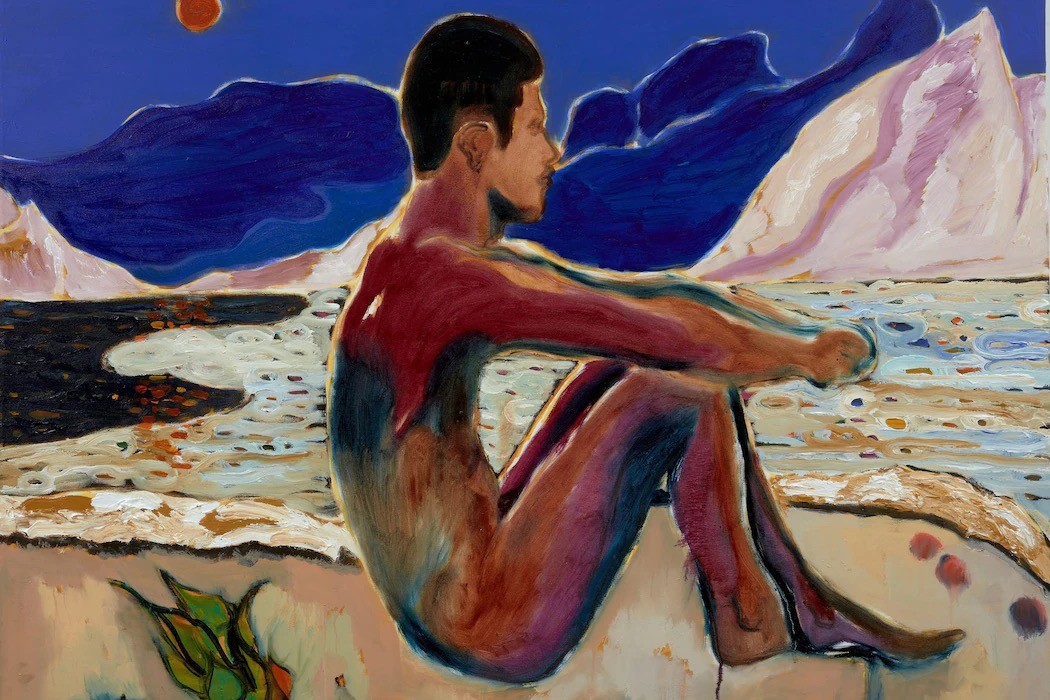
Gideon Appah, Seated Man, 2021-2022
Essays
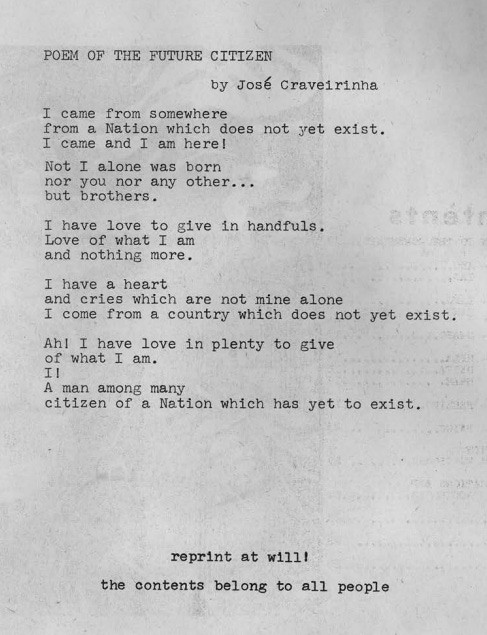
I came from somewhere
from a Nation which does not yet exist.
I came and I am here!
— José Craveirinha
A note from the field: Practicing possibility is harder than sensing it.
There is a version of Ijeruka on the horizon that I can see so clearly it almost feels inevitable. The shape of it, the reach of it, the depth of what it could offer. I can sense it the way you sense weather changing — not yet here, but real. And I know it’s necessary. I know it’s possible.
But what it will take to create it. That’s the part that keeps me honest.
When I started Ijeruka in 2022, I wanted to respond to a gap in the world. Or at least, a gap in what was available to Black people seeking spaces for genuine self-actualisation, for growth that wasn’t shallow, for knowledge-sharing that honoured the depth of who we are and who we’re becoming. I didn’t want it to be a small project. I wanted it to be consequential, in depth and at scale.
What I didn’t realise is what that would require of me. Not once, but over and over again.
Over the past few years, the challenge has been navigating all the different versions of myself I’ve had to become in order to steward this work well, and doing so without fragmenting.
The version of me that is worldly, attuned, on top of everything happening around us — and the version that had to step back from the news because absorbing it all was making it impossible to build.
The version that is politicised, holds strong opinions, and wants to speak directly into the moment — and the version that holds opinions loosely, sits with nuance, and can hold competing truths without collapsing into certainty.
The version that is deeply feeling, that senses what people carry before they name it — and the version that had to become pragmatic, entrepreneurial, and business-minded enough to actually move things forward.
The version that works slowly, with depth and care — and the version that has to move with speed and urgency when the moment demands it.
These are not sequential stages. They are all me. And the hardest thing I have learned is that I do not get to pick one.
For a long time, I thought I would arrive somewhere. I thought there would be a point where I could say: this is who I am now. This is how I operate. I’ve figured it out. I thought the work was to become the right version of myself — the one who could hold everything Ijeruka needs — and then stay there.
That moment has not come. I have accepted that it is not coming.
The trap of fixity
I’m not alone in this.
I think many of us — particularly those building, leading, or creating something that feels larger than ourselves — are waiting for the same arrival. The moment when we can define who we are in this, name our standards, settle into our codes, and feel steady.
And I understand the impulse. It makes sense. If I can determine who I am in this situation, I’ll feel safer. If I can name my boundaries, my way of operating, my persona — the pragmatic one, the firm one, the soft one, the boundaried one — then I’ll know how to move. I’ll have ground beneath me.
How do I navigate this power dynamic? Well, I’m the confident one, so I’ll lead.
How do I build this business? Well, I’m the artist, so I need to stay soft and feeling.
How do I respond to this wrong I see? Well, I’m the just one, so I’ll name and shame.
How do I handle this workplace? I have firm boundaries and clear communication, and I don’t have friendships with coworkers. That’s who I am.
And these aren’t wrong. They are standards. They served you. In many cases, they were the architecture that made sustained excellence possible.
But here is what I keep seeing — in my own life, and in the lives of the people I work with: the terrain shifts. The organisation asks for something you haven’t had to offer before. The business requires a different gear. The relationship needs a version of you that your current standards didn’t account for. The complexity of the situation you’re confronting isn’t so easily analysed. And the standards that made you feel steady? They start to feel like a cage.
The question of range
Often, when we come to this realisation, we start to think there’s something wrong with the ways we’ve been operating. We fall into the trap of pathologising, or worse, guilting, ourselves for who we’ve been.
But the real question is not whether you were right or wrong. It’s not whether you need new standards. It’s something more fundamental:
Do you have range? And can you move through that range without losing yourself?
Because the work of building toward a future that doesn’t yet exist — whether that’s a company, a creative project, a new way of leading, or a different kind of life — does not ask you to become one thing. It asks you to hold many things. To be pragmatic and feeling. To move with urgency and with depth. To have firm standards and to hold them loosely enough that they can be rewritten when the terrain demands it.
And the hardest part is not any single mode. It’s the shifting. It’s the moment when you have to move from one gear to another and you feel the ground drop out.
The guilt of having been pragmatic when maybe you should have been feeling.
The second-guessing when you were open and vulnerable and now you’re wondering if that was naive.
The worry that people around you — the ones who knew you in your last mode — will see your changing as inconsistency. Or weakness. Or threat.
This is where people collapse. Not from lack of vision. Not from lack of values. But from the sheer difficulty of moving between modes without interpreting the movement as failure.
I want to be clear about something: this is not about abandoning what came before. Every version of yourself that served you was valuable. When you shift, you are not proving that the last mode was wrong. You are proving that you are alive. That you are in relationship with a world that moves. That you are building the capacity to hold more, not by fixing yourself in place, but by expanding what you can access.
Range is not the absence of standards. It’s the ability to move between them without fragmenting.
Why this is hard for us
Black leaders and builders, can I be direct and honest with you for moment?
Many of us learned to narrow our aperture in order to survive and perform. We built sophisticated internal systems — for reading rooms, for managing perception, for protecting what’s sacred, for excelling inside structures we didn’t author.
These systems are not flaws. They are intelligence. They represent decades, sometimes generations, of calibration.
But narrowing was always a strategy for a particular terrain. And when the terrain shifts — when you’re not just surviving a system but trying to shape one, not just performing excellence but trying to practice possibility — the narrowing becomes the limitation.
You can’t bring people along if your operating system was built for keeping distance. You can’t build something unprecedented if your standards are calibrated for legibility within the existing order. You can’t stay attuned to a complex, volatile world if your protective architecture requires you to shut it out.
But understand this: your narrowing was not a mistake. It was a necessary phase.
The question is whether you can honour what your previous modes, standards and systems gave you and still let the next season ask something different.
What Craveirinha knew
In colonial Mozambique, the Portuguese regime controlled more than land and labour. It controlled language: what could be named, who could name it, and what forms of knowledge were considered legitimate.
The entire architecture of colonial rule depended on a particular arrangement: that the colonised would operate within the standards the system provided, and would not develop the capacity to author alternatives.
José Craveirinha was a journalist, a poet, and a man who refused that arrangement. He wrote in Portuguese — the coloniser’s language — but he bent it. He infused it with Ronga rhythms, with the cadences of Mozambican life, with an insistence on naming what the regime needed to remain unnamed. The Portuguese secret police arrested him twice because he carried language that made a different reality visible.
What strikes me now about Craveirinha is his practice. He didn’t arrive at a fixed mode of resistance and stay there. He had to keep rewriting — bending the language available to him, evolving his relationship to the tools at hand, refusing the trap of fixity even when fixity would have been safer. The practice of staying attuned, of continuing to author alternatives, was the work.
His poem leaves us with a question we rarely ask ourselves: what guarantees that the future you’re building will be different from what you’re in now?
Nothing guarantees it — except the ongoing practice of not calcifying. Of continuing to rewrite. Of staying in the conversation with your becoming.
Not I alone was born, nor you nor any other… but brothers.
There are others in this same conversation. We just can’t always see each other.
What’s at stake
So let me ask you what I ask every person I work with:
What is at stake if you change? What comfort do you lose? What identity do you release? What will the people around you think when you stop operating the way they’ve come to expect?
And what is at stake if you don’t? What future goes unbuilt? What attunement do you sacrifice? What does it cost to stay fixed in a mode that was made for a terrain you’ve already outpaced?
For those of us building toward futures that don’t yet exist, the capacity to stay in conversation with yourself, your standards, your way of being in the world is the work itself.
It’s not about arrival. It’s about range.
Let's turn the lens on you
Over the next few days, sit with the idea that the negotiation never ends. Not to overwhelm yourself. But to notice where you are in it.
Where are you waiting to arrive? What would it mean to accept that the arrival isn’t coming — and that the practice of moving through your range is the thing?
Think of the different versions of yourself that this season of your life is asking for. Can you name them? Can you move between them without interpreting the movement as failure?
What standard are you holding on to — not because it’s still serving you, but because it’s familiar? What would it feel like to loosen your grip on it, even slightly?
What is at stake if you change? And what is at stake if you don’t?
A small practice: choose one moment this week where you let yourself be in the middle, between the old standard and the new one that hasn’t fully formed yet. Not resolving it.
Notice what it feels like to not have the answer.